Shapes of ideal stalagmites
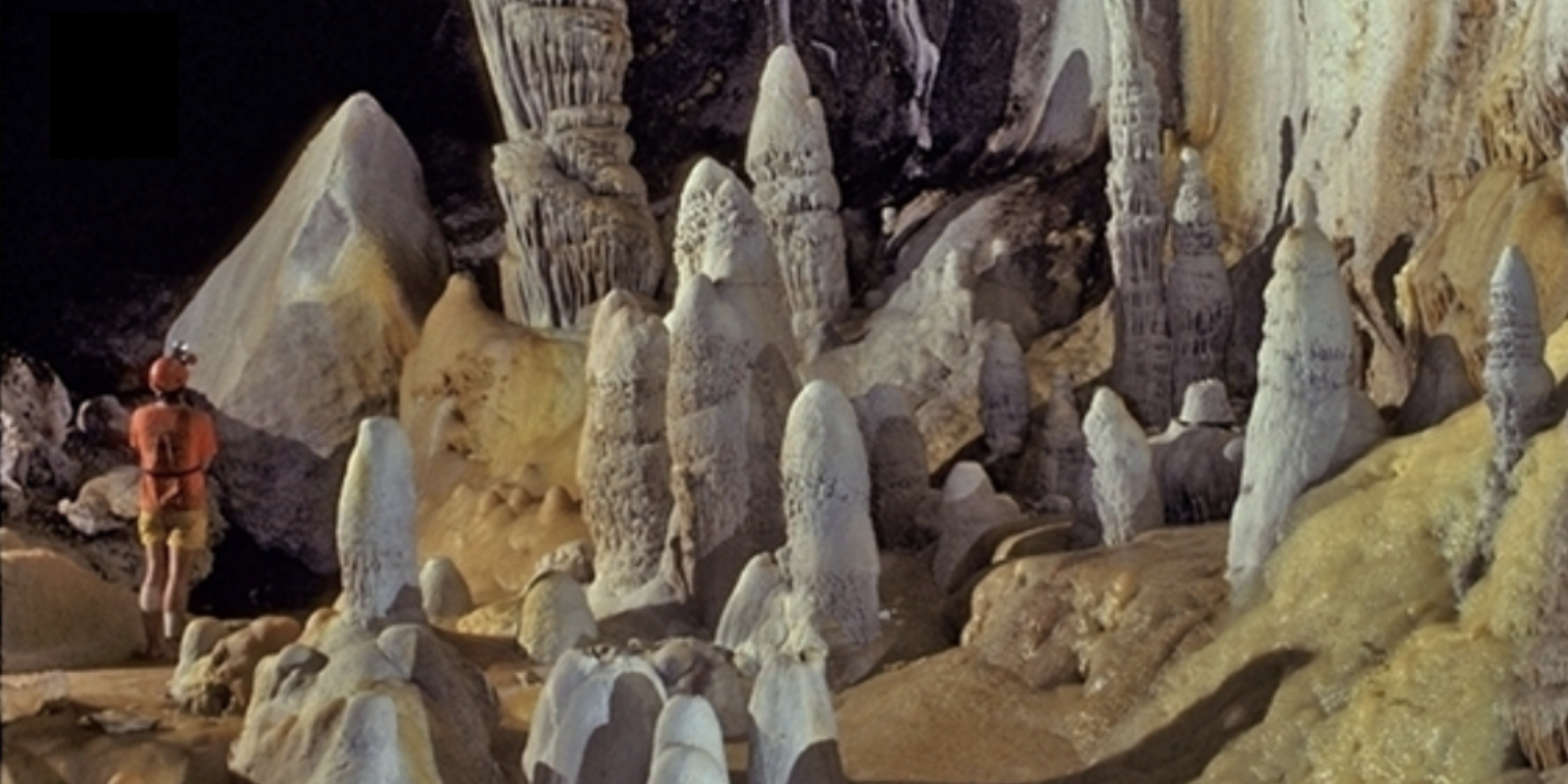
If you have ever been to caves, you probably have seen bulky columnar like shapes growing from the ground. These shapes are commonly known as Stalgmite which forms by the buildup of minerals deposit from water dripping from the ceiling. However, the time-scales of their formation can be thousands of years, if not millions. So its hard to study the physics behind this shapes.
In a recent study (Szymczak et. al.) published in Proceedings of the National Academy of Sciences (PNAS), physicists proposed a simple yet beautiful theory which can explain the conditions behind different shapes of stalagmite. The droplets from the ceiling does not fall always at one spot, but due to air turbulence hit different spots each time. This results a flat top which is commonly observed in young stalagmites. As it grows in height, the water droplet has less distance to travel, resulting in increased precision and a pointy shape structure. (Image Credit: Dave Bunnell/Under Earth Images. CC BY-SA 2.5 license)